
Long Island City combines towers, converted industrial lofts, and low-rise homes in a tightly packed grid, which means tree work is rarely simple. Mature street trees along Jackson Avenue and Dutch Kills often push roots into sidewalks and utility corridors, while rooftop plantings and courtyard canopies need careful, controlled care. Our network of tree services in Staten Island knows how to work in narrow access points, coordinate with building staff, and protect nearby infrastructure while keeping urban properties safe and functional.
That is why so many property owners in Long Island City, NY, turn to Arbor Tree Care for dependable service throughout the year.

Prefer to Talk to An Expert?
(917) 809-6867
Why Long Island City Property Owners Count on Local Pros
Crews with neighborhood experience understand the area's mix of dense development, mature street trees, and waterfront exposure. That local knowledge helps every job get done with the right equipment and methods for Long Island City, including tight access, underground root conflicts, and salt-air stress common in this part of Queens near Staten Island.
From professional tree pruning solutions on narrow side streets off Purves Street to reliable storm damage services near the Gantry Plaza State Park waterfront, each project is completed with care, precision, and property protection in mind.
If you care about your property, local contractors can help keep it maintained, safe, and structurally sound in Long Island City.
Our Tree-Service Services
in Staten Island, NY, Include
Tree Care Built for Your Long Island City Block
Mixed-use buildings and limited access make this neighborhood a place where standard tree work often falls short. That is why local professionals tailor each visit to the conditions on site, whether the job involves a courtyard, a tree pit, or a rooftop planting bed.
It makes no difference whether the property is a high-rise in Hunters Point, a converted loft in Dutch Kills, or a row home near the Court Square subway plaza.
From tree trimming and tree removal to stump removal and landscape design, every service is shaped around the neighborhood and the needs of each property.
Long Island City's Tree Story, Shaped by Its Past
Long Island City has transformed from an industrial waterfront into one of Queens' fastest-growing mixed-use neighborhoods. Even so, the legacy remains in compacted soils, aging street tree infrastructure, and root systems that still influence how tree care has to be handled today.
Root Intrusion and Sidewalk Conflicts
In Dutch Kills, Hunters Point, and nearby blocks, many mature street trees have roots that spread under older sidewalks and utility corridors. The result is often lifted pavement, stressed root zones, and concerns for both pedestrian safety and tree health.
Local professionals address these issues with selective root pruning, protective barriers, and coordinated sidewalk repairs that help reduce future access problems while preserving tree vitality whenever possible.
Salt Air Stress and East River Exposure
Waterfront areas such as Gantry Plaza and Center Boulevard are attractive for their views, but the East River's salt-heavy wind can dry out foliage, damage bark, and weaken exposed trees over time. That repeated pressure often leads to canopy dieback and greater storm risk.
Professionals manage those conditions with selective crown reduction, guidance on wind-tolerant species for tree planting, and tree fertilizing plans designed for salt-stressed urban soil.
Fungal Disease and Urban Heat Island Pressure
With so much pavement and so little permeable soil, many Long Island City street trees struggle to balance heat and moisture. Those conditions can encourage fungal problems and secondary pest activity across the urban canopy.
Trusted pros respond with tree disease treatments, insect management, and soil aeration services that support healthier canopies and limit the spread of disease to nearby trees.
Storm Damage and Wind-Driven Limb Failure
Nor'easters and quick-moving summer storms along the East River corridor can bring strong winds and heavy rain, leading to broken limbs and even uprooted trees across Long Island City's open streets and plazas.
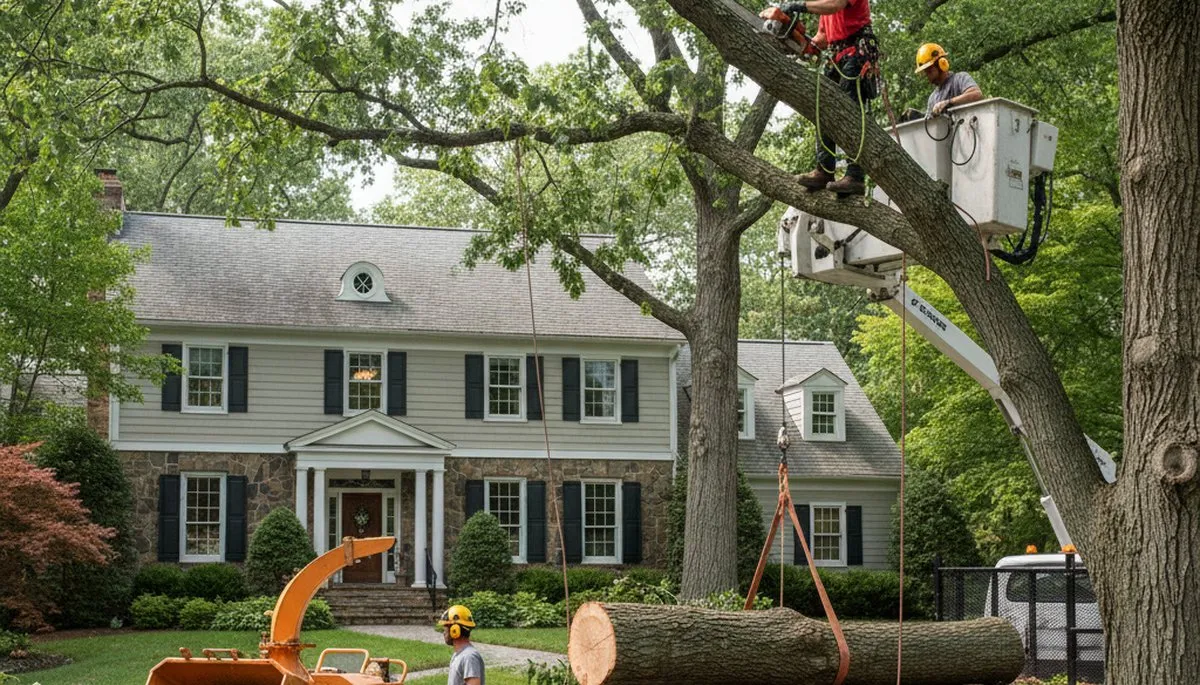
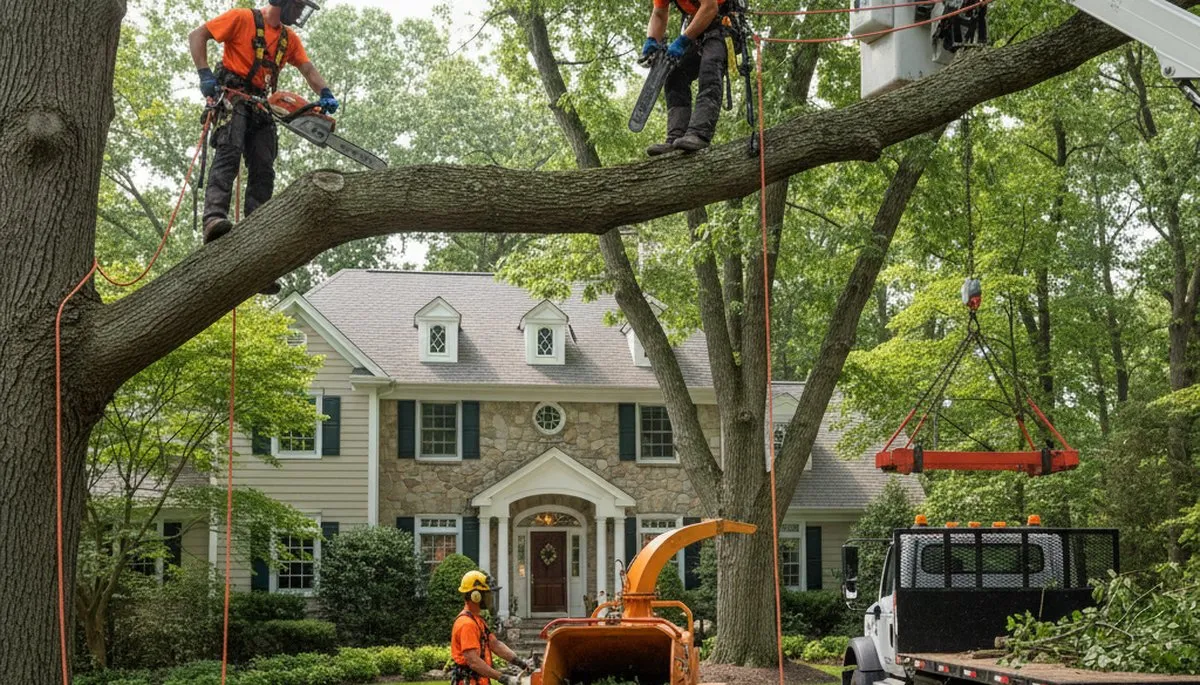
Experienced crews provide emergency tree services with aerial lifts, rigging equipment, and organized debris removal to protect property and restore access after severe weather. Teams serving Long Island City also extend quick response to nearby communities, including those needing tree trimming services in Sunnyside, NY and emergency tree services in Maspeth, NY.
Confined Access in Dense Urban Blocks
Long Island City's narrow alleyways, zero-lot-line buildings, and shared courtyards make staging equipment and removing debris difficult without affecting neighboring properties or public sidewalks.
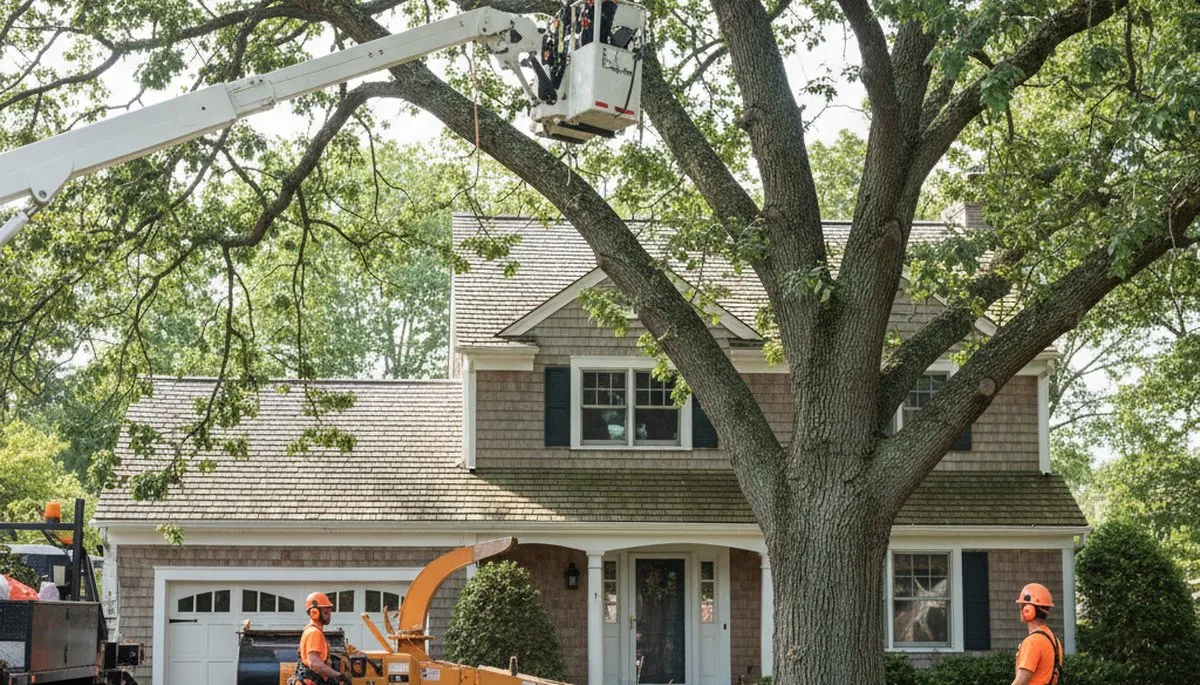
Local pros rely on compact aerial lifts and small-footprint chipping equipment, with an emphasis on containment and minimal disruption. That approach makes it possible to serve everything from a single street tree pit to a multi-unit residential courtyard.

Kick off your tree service project today!

Tree Services in Long Island City, NY: Seasonal Care for Every Property
Whether the need is routine maintenance or urgent storm cleanup, local pros help keep properties healthy, stable, and safe all year long:
Routine Tree Trimming and Pruning in Long Island City, NY
- Street Tree Crown Reduction Along Jackson Avenue: Overgrown canopies along Jackson Avenue are cut back to preserve clearance for overhead utilities and foot traffic, while lowering the risk of limb failure during high winds.
- Courtyard Canopy Thinning in Hunters Point: Trees in Hunters Point courtyards benefit from selective thinning that increases air movement and light, helping reduce fungal pressure in shaded areas with limited drainage.
- Structural Pruning for Young Trees Near Court Square: Newly planted trees near the Court Square development corridor receive early structural pruning to build strong branch structure before the canopy fills out.
- Deadwood Removal in Dutch Kills Residential Blocks: Seasonal inspections in Dutch Kills include deadwood removal to reduce the chance of falling branches over parked cars and walkways.
- Shrub and Understory Trimming Near Gantry Plaza: Ornamental shrubs and understory plantings near the Gantry Plaza waterfront receive shrub removal and selective trimming to maintain views and reduce wind resistance.
Plan seasonal trimming before summer storm season to help protect your Long Island City property and the surrounding streetscape.
Tree Removal Services in Long Island City, NY
- Hazardous Tree Removal in Confined Urban Lots: Trees leaning toward buildings or utility lines in zero-lot-line blocks are removed with sectional felling and crane-assisted rigging to protect nearby structures.
- Storm-Damaged Tree Removal After Nor'easters: Trees split or uprooted along the East River waterfront are cleared quickly to restore safe access for pedestrians and vehicles.
- Dead Tree Removal from Residential Courtyards: Dead or declining trees in shared courtyards are removed on coordinated schedules to reduce disruption for residents and common areas.
- Invasive Species Removal from Vacant Lots: Invasive tree species that take hold in redeveloping lots are removed as part of broader landscaping and site preparation work.
- Post-Construction Tree Removal Near Development Sites: Trees affected by nearby construction along the Queens Plaza corridor are evaluated and removed before they create hazards for adjacent properties.
Removing hazardous or dead trees on time helps reduce liability and limits the risk of additional damage during future storms.
Stump Grinding and Cleanup in Long Island City, NY
- Stump Grinding in Narrow Sidewalk Tree Pits: Stumps left in standard sidewalk tree pits are ground below grade with compact stump grinders that fit the tight footprint without harming surrounding concrete.
- Root Flare Cleanup After Large Tree Removal: After large tree removal in Hunters Point residential blocks, exposed root flares and surface roots are ground back so the area can be restored for replanting or pavement work.
- Multi-Stump Clearing on Redevelopment Sites: Properties moving from industrial to residential use in Dutch Kills often need multiple legacy stumps cleared before new lawn care and landscape installation can begin.
- Debris Hauling and Site Restoration After Grinding: After stump grinding, crews remove debris and backfill the site, leaving it ready for turf restoration or hardscape installation with minimal disruption.
- Stump Treatment for Invasive Regrowth Prevention: Stumps from invasive species are treated after grinding to help prevent resprouting and reduce long-term maintenance needs on Long Island City properties.
Stump removal clears tripping hazards, opens up usable space, and prepares Long Island City properties for new planting or hardscape improvements without leaving hidden root decay behind.
Emergency Tree Services in Long Island City, NY
- 24/7 Fallen Tree Response After Storm Events: When storms bring down trees across streets, driveways, or building entrances, emergency crews respond quickly to clear debris and restore safe access.
- Hazardous Limb Removal Over Occupied Structures: Cracked or partially attached limbs over homes and parked vehicles in Hunters Point and Dutch Kills are removed under emergency protocols to prevent further damage.
- Emergency root protection After Utility Excavation: If emergency utility work exposes or cuts major roots near street trees, crews respond to assess the damage and add protective measures that support stability.
- Post-Storm Canopy Assessment and Triage: After major weather events, local professionals inspect affected blocks quickly to identify trees that need immediate removal and those that can be stabilized with corrective pruning.
- Lightning Protection Installation for High-Value Specimen Trees: Tall specimen trees near Gantry Plaza can be outfitted with lightning protection systems to lower the risk of major strike damage during summer thunderstorm season.
Fast emergency response helps limit further damage after storms, reduces repair costs, and restores safer conditions across Long Island City's dense streetscape.